Mostrando entradas con la etiqueta 1969. Mostrar todas las entradas

jueves, 12 de noviembre de 2009

Flying Burrito Brothers - 1969 - The Gilded Palace Of Sin

By 1969, Gram Parsons had already built the foundation of the country-rock movement through his work with the International Submarine Band and the Byrds, but his first album with the Flying Burrito Brothers, The Gilded Palace of Sin, was where he revealed the full extent of his talents, and it ranks among the finest and most influential albums the genre would ever produce. As a songwriter, Parsons delivered some of his finest work on this set; "Hot Burrito No. 1" and "Hot Burrito No. 2" both blend the hurt of classic country weepers with a contemporary sense of anger, jealousy, and confusion, and "Sin City" can either be seen as a parody or a sincere meditation on a city gone mad, and it hits home in both contexts. Parsons was rarely as strong as a vocalist as he was here, and his covers of "Dark End of the Street" and "Do Right Woman" prove just how much he had been learning from R&B as well as C&W. And Parsons was fortunate enough to be working with a band who truly added to his vision, rather than simply backing him up; the distorted swoops of Sneaky Pete Kleinow's fuzztone steel guitar provides a perfect bridge between country and psychedelic rock, and Chris Hillman's strong and supportive harmony vocals blend flawlessly with Parsons' (and he also proved to be a valuable songwriting partner, collaborating on a number of great tunes with Gram). While The Gilded Palace of Sin barely registered on the pop culture radar in 1969, literally dozens of bands (the Eagles most notable among them) would find inspiration in this music and enjoy far greater success. But no one ever brought rock and country together quite like the Flying Burrito Brothers, and this album remains their greatest accomplishment.


¡Aquí!

miércoles, 11 de noviembre de 2009

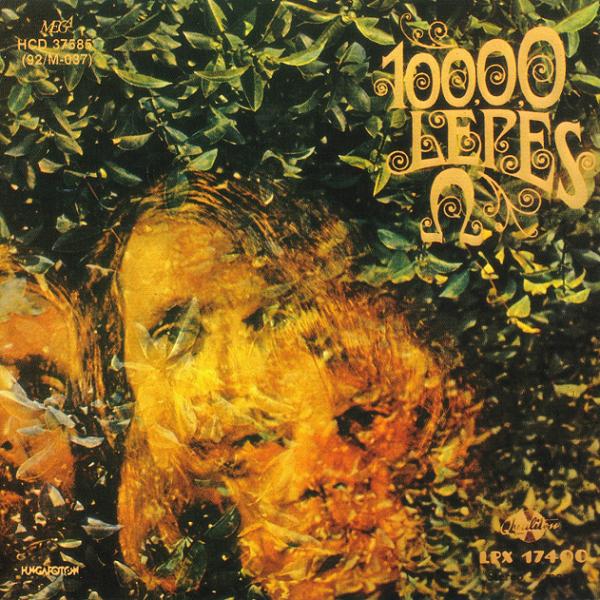
Omega - 1969 - 10,000 Lépés

Classic album from this legendary Hungarian band. In order to understand and appreciate what a remarkable acheivement this work was when it was recorded in 1968 it is perhaps necassary to briefly examine the constraints and restrictions faced by aspiring pop bands behind the veil of The Iron Curtain during the 1960's.

Despite the fact that Hungary was one of the first breakaway satelite countries both socially and economically under Josef Kadar's New Economic Mechanism implemented in 1966, a censorship board known as The Song Commitee had been established in order to syphen out any sensitive material which it deemed harmful to or which seeked to undermine the idealogical agenda of the state. This was a good thing and a bad thing for the bands. They could play their rock n'roll music, which in itself was considered to be symbolic of western capitalistic endeavours, but the lyrical contents were not to cross any fine lines politically. One has to bear in mind that this was the time when The Beatles were singing about a revolution, Bob Dylan was speaking his mind through the rock medium and closer to home in Western Europe bands like Amon Duul and Floh de Cologne were making political musical statements. It was the 60's man!

Omega originated as a student beat band , formed by a group of friends attending Budapest Technical College and played cover versions of songs from bands like the Beatles and Rolling Stones. In 1967 they released an album of original Hungarian language pop oriented songs which incorporated traditional Hungarian folk roots. The following year they recorded 10,000 Lepes and began to distance themselves from communist idealogies. Although technically, the album is raw sounding by contemporary western standards the influences were there. But they still clung to their folk roots in much the same way some British bands such as The Strawbs and the Irish prog band Fruup retained their folk heritage. The themes throughout the album are mostly mystical and full of legend and even if the listener is not familiar with the unique Hungarian language the music is very moody and appropriate to the individual song concepts. For example Tuzvihar ( Stormy Fire ) is a psychedelic blues based hard rock song which describes the story of a raging wildfire which ravages the country while the minor keyed symphonic Gyonghaju lany ( the Girl With The Pearls In Her Hair ) is about a beautiful girl who mysteriously appears and brings hope and solace to that dark and tormented world. Other suprises come in the form of Az 1958 as Boogie-woogie klubban ( In a Boogie- Woogie Club 1958) which is a rolicking piano piece accompanied by a catchy guitar hook that describes a good ole time in a boogie woogie club. Petroleum lampa ( Oil Lamp) is almost a pure folk song about an old oil lamp which is portrayed as a metaphor of false hope while Spanyol gitar legenda is a graceful ballad about a legend from another time in a far away place. The majestic title track 10,000 steps with it's continuous almost pompous drum beat is about an ongoing quest to march forward despite adversity and ties into other themes explored on the album. Who said Sgt. Peppers was the first concept album?

Omega evolved into the biggest rock act to emerge from Eastern Europe ever, recording in English and German touring Western Europe as well as Japan. Omega broke down barriers long before the Berlin Wall was broken down and for those who want a taste of what was going on behind The Iron Curtain rock-wise in the 1960's 10,000 Lepes is an interesting and important audio document which reveals the early Omega east meets west rock formula. Vintage Eastern European prog which rocked against the odds that takes the listener into a forbidden place in a dangerous time. Highly recomended for serious students of the prog rock genre.


¡Aquí!

sábado, 12 de septiembre de 2009

Walker, Scott - 1969 - Scott 4

Walker dropped out of the British Top Ten with his fourth album, but the result was probably his finest '60s LP. While the tension between the bloated production and his introspective, ambitious lyrics remains, much of the over-the-top bombast of the orchestral arrangements has been reined in, leaving a relatively stripped-down approach that complements his songs rather than smothering them. This is the first Walker album to feature entirely original material, and his songwriting is more lucid and cutting. Several of the tracks stand among his finest. "The Seventh Seal," based upon the classic film by Ingmar Bergman, features remarkably ambitious (and relatively successful) lyrics set against a haunting Ennio Morricone-style arrangement. "The Old Man's Back Again" also echoes Morricone, and tackles no less ambitious a lyrical palette; "dedicated to the neo-Stalinist regime," the "old man" of this song was supposedly Josef Stalin. "Hero of the War" is also one of Walker's better vignettes, serenading his war hero with a cryptic mix of tribute and irony. Other songs show engaging folk, country, and soul influences that were largely buried on his previous solo albums.


¡Aquí!

martes, 28 de julio de 2009

Fairport Convention - 1969 - Liege & Lief

In the decades since its original release, more than one writer has declared Fairport Convention's Liege & Lief the definitive British folk-rock album, a distinction it holds at least in part because it grants equal importance to all three parts of that formula. While Fairport had begun dipping their toes into British traditional folk with their stellar version of "A Sailor's Life" on Unhalfbricking, Liege & Lief found them diving head first into the possibilities of England's musical past, with Ashley Hutchings digging through the archives at the Cecil Sharp House in search of musical treasure, and the musicians (in particular vocalist Sandy Denny) eagerly embracing the dark mysteries of this music. (Only two of the album's eight songs were group originals, though "Crazy Man Michael" and "Come All Ye" hardly stand out from their antique counterparts.) Liege & Lief was also recorded after a tour bus crash claimed the lives of original Fairport drummer Martin Lamble and Richard Thompson's girlfriend; as the members of the group worked to shake off the tragedy (and break in new drummer Dave Mattacks and full-time fiddler Dave Swarbrick), they became a stronger and more adventurous unit, less interested in the neo-Jefferson Airplane direction of their earlier work and firmly committed to fusing time-worn folk with electric instruments while honoring both. And while Liege & Lief was the most purely folk-oriented Fairport Convention album to date, it also rocked hard in a thoroughly original and uncompromising way; the "Lark in the Morning" medley swings unrelentingly, the group's crashing dynamics wring every last ounce of drama from "Tam Lin" and "Matty Groves," and Thompson and Swarbrick's soloing is dazzling throughout. Liege & Lief introduced a large new audience to the beauty of British folk, but Fairport Convention's interpretations spoke of the present as much as the past, and the result was timeless music in the best sense of the term.


¡Aquí!