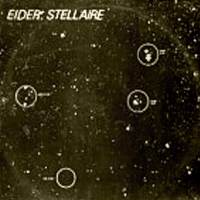
This album is, along with Eskaton's 4-Vision, the most eagerly sought-after Zeuhl disc around the planet beit Kobaia or Earth. However contrarily to Eskaton, Eider Stellaire has no wish to reissue their three albums, so most likely unless there are bootleggers around, ES will remain out of most proghead's ears for quite a while. So I set out on a hunt and finally caught a vinyl of this first album, issued in 81 on a private label and see what the fuss was all about, as I had for 4-Vision. Maybe I'll pierce a bit the speculation bubble around this, but what you get is nothing extraordinary: just good Zeuhl music with an extra little edge to give it something a tad different, but then again isn't this just about the same as all Zeuhl groups? Take Magma's music as a base or blueprint and work your own version. But in the end, it still sounds like typical Zeuhl, which there is nothing wrong in the first place.
ES is a sextet fronted by two women on vocals, one also playing the odd flute, but for the rest, it's the standard prog quartet with a guest blowing some sax in one tune. On the opening side, the 8-mins+ Onde is a terrific mainly instrumental showcase for everyone, but especially for Delachat's searing guitar. After a piano solo for intro, Arctis is certainly THE typical Zeuhl track of the album with Singery's throbbing bass as the main feature, although there is an out-of-place (or ill-advised) flute intervention, but aside that flaw, the track is outstanding and manages to hold your breath, sustain the suspense, holding the high tension until the final bass throb explosion.
The flipside opens on the aerial Légende where Delachat's saturated guitar is again holding the fore front, but Hirne's keyboards are holding the 100 MPH cruise-speed alive. Tetra is somewhat slower and takes a funkier twist, but it slows down to allow the sax's quiet solo to happen. The final Nihil track is probably the hardest and trashiest track of them all, showing a nihilistic attitude
Well, just like for Eskaton's debut album, you might be tempted to pay fortunes for the vinyls and in both case, I can't really tell you that it would be worth it. I have borrowed both of them from a friend and while I wish I had both wax slices, I'm just not prepared to dish out big amounts, even for above average Zeuhl albums. Because after all it does remain Zeuhl and sonically it brings almost nothing new to the Kobaian debate.
1. Onde (1. LP Seite) (8:35)
2. Arctis 6eme éphéméride (7:04)
3. Légende (2. LP Seite) (5:37)
4. Tétra (6:32)
5. Nihil (7:26)
¡Aquí!
 The yang to Astral Weeks' yin, the brilliant Moondance is every bit as much a classic as its predecessor; Van Morrison's first commercially successful solo effort, it retains the previous album's deeply spiritual thrust but transcends its bleak, cathartic intensity to instead explore themes of renewal and redemption. Light, soulful, and jazzy, Moondance opens with the sweetly nostalgic "And It Stoned Me," the song's pastoral imagery establishing the dominant lyrical motif recurring throughout the album -- virtually every track exults in natural wonder, whether it's the nocturnal magic celebrated by the title cut or the unlimited promise offered in "Brand New Day." At the heart of the record is "Caravan," an incantatory ode to the power of radio; equally stirring is the majestic "Into the Mystic," a song of such elemental beauty and grace as to stand as arguably the quintessential Morrison moment.