Mostrando entradas con la etiqueta Folk-Rock. Mostrar todas las entradas

jueves, 19 de mayo de 2011

Simon & Garfunkel - 1968 - Bookends

In March of 1968, Robert Kennedy was still alive and offering a vision for a way out to the America that had deeply entrenched itself in the Vietnam War. The inner-city rebellions in 1967 had shaken the youth culture's image of their own summer of love in that year. The beginning of America's crippling identity crisis had begun to shudder through the culture that would erupt with the death of Kennedy later that spring and the tragedy of the Democratic National Convention in Chicago later that summer. Before it was all over, Martin Luther King, Jr. had also lost his life. In pop culture, rock was exploding everywhere in Western culture. The impact of the Beatles' Sgt. Pepper's Lonely Heart Club Band and the Beach Boys' Pet Sounds -- both made in 1966 -- and the appearance of Jimi Hendrix on the pop scene in 1967 had ushered in a new way of making records, a way that not only referred to and portrayed everyday life but was part of its acceptance for what it was before attempting to transcend it. Earlier that spring, Simon and Garfunkel had slipped their fourth album into the bins with a whisper, the confoundingly literary, profoundly poetic and stunningly beautiful Bookends. Columbia Legacy has presented us S&G's entire catalog painstakingly remastered with extra tracks. The sound on these discs -- and Bookends in particular -- is amazing. It is literally true that there are instrumental passages and studio atmospherics that have never before been audible. As a pair, the two were seemingly equal collaborators with producer and engineer Roy Halee on a highly textured, multi-layered song cycle that offered observations on everything from urban crises that were symptomatic of larger issues, the prospect of old age and death, the loss and dislocation of those who desperately wanted to inherit an American Dream but not the one offered to them, surreal yet wistful reflections on youthful innocence lost forever to the cold winds of change.

Bookends is a literary album that contains the most minimal of openings with the theme, an acoustic guitar stating itself slowly and plaintively before erupting into the wash of synthesizers and dissonance that is "Save the Life of My Child." The uneasy rock & roll that carries the song through its disaster and the revelation of "Oh my grace, I've got no hiding place," which is the mere hint of what is to come in this wide open terrain of the previously familiar but completely unknown. The classic "America" is next, a folk song with a lilting soprano saxophone in the refrain and a small pipe organ painting the acoustic guitars in the more poignant verses. The song relies on pop structures to carry its message of hope and disillusionment as two people travel the American landscape searching for it until it dawns on them that everyone else on the freeway is doing the same thing. Its sweetness and sophisticated melodic invention are toppled by the message of the song and it becomes an ellipsis, a cipher, turned back on itself into disappearance, wondering what question to ask next. The sound of a lit cigarette is the opening of "Overs," a balladic study in the emptiness at the end of the relationship. The sound of inhaling and exhaling of the smoke tells the entire story. Also woven into the mix is a two-minute field recording of the voices of old people made by Garfunkel, collected from nursing homes and centers for the aged. The disembodied voices are chilling and heartbreakingly beautiful in their different observations, entire lifetimes summed up in a few seconds. This interlude leads into "Old Friends," which carries the message deeper as the image of two old men sitting on a park bench in languid statements of life lived ordinarily but poetically share not only their memories but also the commonality of their fear. A horn section threatens to interrupt the reverie, carrying the chaos they feel, their lack of control over current events, but is warded off as denial and the gentleness of the melody returns and fades into the album's opening theme, suggesting that we preserve our memories. As "Fakin' It" kicks to the fore, we feel the separation inherent in Simon's generational view of the unconscious separation of heart and mind. The tune is as full of hooks as a fishing boat and Halee swipes a bit from the Beatles' "Tomorrow Never Knows" and eases orchestral layers into the mix, subtly of course, but ever-present and recognizable nonetheless. With "Fakin' It," the depth of the album's meditation presents itself in earnest. Synth lines and handclaps give way to snare drums and acoustic guitars, and the first appearance of loss shows itself for what it is, the passing of life, moment by moment, memory by memory so quickly, that pretending is somehow preferable to the reality of everyday life. When the horn section and strings bring the crescendos and the lyric asserts, "This feeling of fakin' it/I still haven't shaken it/I know I'm fakin' it/I'm not really makin' it." Even Leonard Cohen's dark prophecies never stated the case so plainly -- in a folk-rock tune. The identity crisis inherent in the jazzy "Punky's Dilemma" melds the loss of innocence and childhood with the cynicism of present-day living. The final four tracks of the original album, "Mrs. Robinson," the theme song for the film The Graduate, "A Hazy Shade of Winter," and the album's final track, the George-influenced "At the Zoo," offer as tremblingly bleak a vision for the future as any thing done by the Velvet Underground, but rooted in the lives of everyday people, not in the decadent underground personages of New York's Factory studio. But the album is also a warning that to pay attention is to take as much control of one's fate as possible. The bonus tracks, a different take of "Old Friends" and "You Don't Know Where Your Interest Lies" -- which ended up as the B-side of "Hazy Shade of Winter" -- add dimension to what was easily the most ambitious recording of Simon & Garfunkel's career. Its problematic themes, spare yet striking arrangements, and augmented orchestral instrumentation created a backdrop for the sounds of a generation moving through a workaday world they no longer accepted as real, a world they never understood in first place. That S&G never overstate the case here, never preach to the converted but instead almost journalistically observe the questions in the process of their being asked is a monumental achievement. That they did so in three- and four-minute pop songs is almost inconceivable for the time.

1 Bookends Theme Simon 0:32
2 Save the Life of My Child Simon 2:48
3 America Simon 3:35
4 Overs Simon 2:18
5 Voices of Old People Garfunkel, Simon 2:07
6 Old Friends Simon 4:05
7 Bookends Theme Simon 2:35
8 Fakin' It Simon 1:23
9 Punky's Dilemma Simon 3:19
10 Mrs. Robinson Simon 2:17
11 A Hazy Shade of Winter Simon 2:17
12 At the Zoo Simon 2:22

¡Aquí!

lunes, 16 de mayo de 2011

Van Morrison - 1970 - Moondance

The yang to Astral Weeks' yin, the brilliant Moondance is every bit as much a classic as its predecessor; Van Morrison's first commercially successful solo effort, it retains the previous album's deeply spiritual thrust but transcends its bleak, cathartic intensity to instead explore themes of renewal and redemption. Light, soulful, and jazzy, Moondance opens with the sweetly nostalgic "And It Stoned Me," the song's pastoral imagery establishing the dominant lyrical motif recurring throughout the album -- virtually every track exults in natural wonder, whether it's the nocturnal magic celebrated by the title cut or the unlimited promise offered in "Brand New Day." At the heart of the record is "Caravan," an incantatory ode to the power of radio; equally stirring is the majestic "Into the Mystic," a song of such elemental beauty and grace as to stand as arguably the quintessential Morrison moment.

1 And It Stoned Me Morrison 4:30
2 Moondance Morrison 4:35
3 Crazy Love Morrison 2:34
4 Caravan Morrison 4:57
5 Into the Mystic Morrison 3:25
6 Come Running Morrison 2:30
7 These Dreams of You Morrison 3:50
8 Brand New Day Morrison 5:09
9 Everyone Morrison 3:31
10 Glad Tidings Morrison 3:13

¡Aquí!

domingo, 15 de noviembre de 2009

Harris, Emmylou - 1975 - Pieces Of The Sky

Emmylou Harris' major-label solo debut quickly establishes the pattern that the vast majority of her subsequent work would follow: Pieces of the Sky is bravely eclectic, impeccably performed, and achingly beautiful. Amid a collection of songs that ranks among her most well-chosen -- ranging from the catalogs of the Beatles ("For No One") to Boudleaux and Felice Bryant ("Sleepless Nights") and the Louvin Brothers (the hit "If I Could Only Win Your Love") -- the record's centerpiece is one of Harris' rare original compositions, "Boulder to Birmingham," her stirring tribute to fallen mentor Gram Parsons.


¡Aquí!

jueves, 29 de octubre de 2009

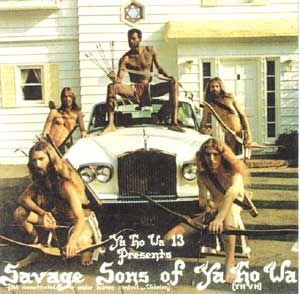
Yahowa 13 - 1974 - Savage Sons Of Yahowa

Father Yod/Yahowa's strange journey continued to take unpredictable twists on Yahowa 13's second album. Like Father Yod & the Spirit of '76's All or Nothing at All, this was so sonically unrelated to any of their prior recordings that it sounded like the work of an entirely different group of musicians. Unlike All or Nothing at All, it was also a change for the better. Not entirely accidentally, Father Yod himself does not appear on the album, ceding control of the music to Sunflower Aquarian, Djin Aquarian, Rhythm Aquarian, and Octavious Aquarian. It is obvious that one or more of these guys must have been huge Neil Young & Crazy Horse fans, as about half the songs are rougher approximations of his hard rock sound circa the early 1970s. And while those cuts are derivative, they're not half bad either. The vocals on "Edge of a Dream" are an especially spooky Neil Young soundalike, and "Red River Valley" has a nice hard rock spin on the kinds of melodies Neil used on compositions like "Old Man." "Making a Dollar" is rustic hard country-rock Crazy Horse with a touch of Harrisonesque Beatles. A few of the cuts eschew the overt Young influence for eccentric, roots-flavored hard rock. The vocals on these are so much throatier and blacker -- in the mode of a grainier Dr. John or War -- that it doesn't seem they could possibly be the work of the same singer. (The credits, as usual for Yahowa, don't shed any definite light on the situation.) This is the first Yod/Yahowa disc that can be accepted as a legitimate rock record on its own terms, rather than as a novelty of sorts. Were it done by some other obscure band on an independent label, one wouldn't think to make the connection between the music and the sort of eccentric mysticism that Yod and his followers practiced. The album has been reissued as one disc of the 13-CD God and Hair: Yahowha Collection box set.

1. Edge of a Dream (2:11)
2. Fire in the Sky (5:07)
3. Just Sitting Here (4:01)
4. A Thousand Sighs (7:30)
5. Red River Valley (4:48)
6. Man the Messiah (4:57)
7. Making a Dollar (5:34)
8. I Thought I Am (4:40)
9. Oh Ya Ho Wa (2:01)

¡Aquí!

martes, 28 de julio de 2009

Fairport Convention

The best British folk-rock band of the late '60s, Fairport Convention did more than any other act to develop a truly British variation on the folk-rock prototype by drawing upon traditional material and styles indigenous to the British Isles. While the revved-up renditions of traditional British folk tunes drew the most critical attention, the group members were also (at least at the outset) talented songwriters as well as interpreters. They were comfortable with conventional harmony-based folk-rock as well as tunes that drew upon more explicitly traditional sources, and boasted some of the best singers and instrumentalists of the day. A revolving door of personnel changes, however, saw the exit of their most distinguished talents, and basically changed the band into a living museum piece after the early '70s, albeit an enjoyable one with integrity.

When Fairport formed around 1967, their goal was not to revive British folk numbers, but to play harmony- and guitar-based folk-rock in a style strongly influenced by Californian groups of the day (especially the Byrds). The lineup that recorded their self-titled debut album in 1968 featured Richard Thompson, Ian Matthews, and Simon Nicol on guitars; Ashley Hutchings on bass; Judy Dyble on vocals; and Martin Lamble on drums. Most of the members sang, though Matthews and Dyble were the strongest vocalists in this early incarnation; all of their early work, in fact, was characterized by blends of male and female vocals, influenced by such American acts as the Mamas & the Papas and Ian & Sylvia. While their first album was derivative, it had some fine material, and the band was already showing a knack for eclecticism, excavating overlooked songs by Joni Mitchell (then virtually unknown) and Emitt Rhodes.

Fairport Convention didn't reach their peak until Dyble was replaced after the first album in 1968 by Sandy Denny, who had previously recorded both as a solo act and with the Strawbs. Denny's penetrating, resonant style qualified her as the best British folk-rock singer of all time, and provided Fairport with the best vocalist they would ever have. What We Did on Our Holidays (1969) and Unhalfbricking (1969) are their best albums, mixing strong originals, excellent covers of contemporary folk-rock songs by the likes of Mitchell and Dylan, and imaginative revivals of traditional folk songs that mixed electric and acoustic instruments with a beguiling ease.

Matthews had left the band in early 1969, and Lamble (still in his teens) died in an accident involving the group's equipment van in mid-1969. That forced Fairport to regroup, replacing Lamble with Dave Mattacks, and adding Dave Swarbrick on fiddle. Their repertoire, too, became much more traditional in focus, and electrified traditional folk numbers would dominate their next album, Liege and Lief (1969). Here critical thought diverges; some insist that this is unequivocally their peak, marking a final escape from their '60s folk-rock influences into a much more original style. This school of thought severely underestimates their songwriting talents, and others feel that they were at their best when mixing original and outside material, and contemporary and traditional styles, in fact becoming more predictable and derivative when they opted to concentrate on British folk chestnuts.

The Liege and Lief lineup didn't last long; by the end of the '60s, Ashley Hutchings had left to join Steeleye Span, replaced by Dave Pegg. More crucially, Denny was also gone, helping to form Fotheringay. Thompson was still on board for Full House (1970), but by the beginning of 1971 he too had departed, leaving Nicol as the only original member.

Fairport have kept going, on and off (mostly on), for the last 25 years, touring and performing frequently. It may be too harsh to dismiss all of their post-Thompson records out of hand; Angel Delight (1971), the first recorded without the guitarist on board, was actually their highest-charting LP in the U.K., reaching the Top Ten. Nicol's exit in late 1971 erased all vestiges of connections to their salad days. Fairport was now not so much a continuous entity as a concept, carried on by musicians dedicated to the electrified British folk style that had been mapped out on Liege and Lief.

So it continues to this day, supported by a devoted fan base (Dirty Linen, the top American roots music magazine, originally began as a Fairport Convention fanzine). Denny would actually return to the group for about a year and a half in the 1970s, prior to her death in 1978; Nicol rejoined in 1976. Keeping track of Fairport's multitudinous lineup changes is a daunting task, and the group has coexisted on an erratic basis with the various other projects of the most frequent members (Nicol, Mattacks, and Pegg, the last of whom has played with Jethro Tull since the late '70s). They played annual reunion concerts during the 1980s and '90s (sometimes joined on-stage by Fairport alumni like Thompson), events that turned into some of the most popular folk festivals in Europe. They've also released some albums of new material intermittently throughout the last couple of decades, mostly pleasant, unexceptional traditional-oriented outings that appeal primarily to diehards.

The most distinguished graduates of Fairport, however, have continued to shape the British folk and folk-rock scene with notable solo and group projects. Richard Thompson is one of the most critically acclaimed singer/songwriters in the world; Ian Matthews made some interesting recordings as a solo act and with Plainsong and Matthews Southern Comfort; Denny sang with Fotheringay and released several solo albums before her death; and Hutchings carried on the most traditional face of British folk-rock with Steeleye Span, the Albion Band, and the Etchingham Steam Band.

1969 - Liege & Lief

Fairport Convention - 1969 - Liege & Lief

In the decades since its original release, more than one writer has declared Fairport Convention's Liege & Lief the definitive British folk-rock album, a distinction it holds at least in part because it grants equal importance to all three parts of that formula. While Fairport had begun dipping their toes into British traditional folk with their stellar version of "A Sailor's Life" on Unhalfbricking, Liege & Lief found them diving head first into the possibilities of England's musical past, with Ashley Hutchings digging through the archives at the Cecil Sharp House in search of musical treasure, and the musicians (in particular vocalist Sandy Denny) eagerly embracing the dark mysteries of this music. (Only two of the album's eight songs were group originals, though "Crazy Man Michael" and "Come All Ye" hardly stand out from their antique counterparts.) Liege & Lief was also recorded after a tour bus crash claimed the lives of original Fairport drummer Martin Lamble and Richard Thompson's girlfriend; as the members of the group worked to shake off the tragedy (and break in new drummer Dave Mattacks and full-time fiddler Dave Swarbrick), they became a stronger and more adventurous unit, less interested in the neo-Jefferson Airplane direction of their earlier work and firmly committed to fusing time-worn folk with electric instruments while honoring both. And while Liege & Lief was the most purely folk-oriented Fairport Convention album to date, it also rocked hard in a thoroughly original and uncompromising way; the "Lark in the Morning" medley swings unrelentingly, the group's crashing dynamics wring every last ounce of drama from "Tam Lin" and "Matty Groves," and Thompson and Swarbrick's soloing is dazzling throughout. Liege & Lief introduced a large new audience to the beauty of British folk, but Fairport Convention's interpretations spoke of the present as much as the past, and the result was timeless music in the best sense of the term.


¡Aquí!

miércoles, 8 de julio de 2009

Grateful Dead

Rock's longest, strangest trip, the Grateful Dead were the psychedelic era's most beloved musical ambassadors as well as its most enduring survivors, spreading their message of peace, love, and mind-expansion across the globe throughout the better part of three decades. The object of adoration for popular music's most fervent and celebrated fan following -- the Deadheads, their numbers and devotion legendary in their own right -- they were the ultimate cult band, creating a self-styled universe all their own; for the better part of their career orbiting well outside of the mainstream, the Dead became superstars solely on their own terms, tie-dyed pied pipers whose epic, free-form live shows were rites of passage for an extended family of listeners who knew no cultural boundaries.

The roots of the Grateful Dead lie with singer/songwriter Jerry Garcia, a longtime bluegrass enthusiast who began playing the guitar at age 15. Upon relocating to Palo Alto, CA, in 1960, he soon befriended Robert Hunter, whose lyrics later graced many of Garcia's most famous melodies; in time, he also came into contact with aspiring electronic music composer Phil Lesh. By 1962, Garcia was playing banjo in a variety of local folk and bluegrass outfits, two years later forming Mother McCree's Uptown Jug Champions with guitarist Bob Weir and keyboardist Ron "Pigpen" McKernan; in 1965, the group was renamed the Warlocks, their lineup now additionally including Lesh on bass as well as Bill Kreutzmann on drums.

The Warlocks made their electric debut that July; Ken Kesey soon tapped them to become the house band at his notorious Acid Tests, a series of now-legendary public LSD parties and multimedia "happenings" mounted prior to the drug's criminalization. As 1965 drew to its close, the Warlocks rechristened themselves the Grateful Dead, the name taken from a folk tale discovered in a dictionary by Garcia; bankrolled by chemist/LSD manufacturer Owsley Stanley, the band members soon moved into a communal house situated at 710 Ashbury Street in San Francisco, becoming a fixture on the local music scene and building a large fan base on the strength of their many free concerts. Signing to MGM, in 1966 the Dead also recorded their first demos; the sessions proved disastrous, and the label dropped the group a short time later.

As 1967 mutated into the Summer of Love, the Dead emerged as one of the top draws on the Bay Area music scene, honing an eclectic repertoire influenced by folk, country, and the blues while regularly appearing at top local venues including the Fillmore Auditorium, the Avalon Ballroom, and the Carousel. In March of 1967 the Dead issued their self-titled Warner Bros. debut LP, a disappointing effort which failed to recapture the cosmic sprawl of their live appearances; after performing at the Monterey Pop Festival, the group expanded to a six-piece with the addition of second drummer Mickey Hart. Their follow-up, 1968's Anthem of the Sun, fared better in documenting the free-form jam aesthetic of their concerts, but after completing 1969's Aoxomoxoa, their penchant for time-consuming studio experimentation left them over 100,000 dollars in debt to the label.

The Dead's response to the situation was to bow to the demands of fans and record their first live album, 1969's Live/Dead; highlighted by a rendition of Garcia's "Dark Star" clocking in at over 23 minutes, the LP succeeded where its studio predecessors failed in capturing the true essence of the group in all of their improvisational, psychedelicized glory. It was followed by a pair of classic 1970 studio efforts, Workingman's Dead and American Beauty; recorded in homage to the group's country and folk roots, the two albums remained the cornerstone of the Dead's live repertoire for years to follow, with its most popular songs -- "Uncle John's Band," "Casey Jones," "Sugar Magnolia," and "Truckin'" among them -- becoming major favorites on FM radio.

Despite increasing radio airplay and respectable album sales, the Dead remained first and foremost a live act, and as their popularity grew across the world they expanded their touring schedule, taking to the road for much of each year. As more and more of their psychedelic-era contemporaries ceased to exist, the group continued attracting greater numbers of fans to their shows, many of them following the Dead across the country; dubbed "Deadheads," these fans became notorious for their adherence to tie-dyed fashions and excessive drug use, their traveling circus ultimately becoming as much the focal point of concert dates as the music itself. Shows were also extensively bootlegged, and not surprisingly the Dead closed out their Warners contract with back-to-back concert LPs -- a 1971 eponymous effort and 1972's Europe '72.

The latter release was the final Dead album to feature Pigpen McKernan, a heavy drinker who died of liver failure on March 8, 1973; his replacement was keyboardist Keith Godchaux, who brought with him wife Donna Jean to sing backing vocals. 1973's Wake of the Flood was the first release on the new Grateful Dead Records imprint; around the time of its follow-up, 1974's Grateful Dead From the Mars Hotel, the group took a hiatus from the road to allow its members the opportunity to pursue solo projects. After returning to the live arena with a 1976 tour, the Dead signed to Arista to release Terrapin Station, the first in a series of misguided studio efforts that culminated in 1980's Go to Heaven, widely considered the weakest record in the group's catalog -- so weak, in fact, that they did not re-enter the studio for another seven years.

The early '80s was a time of considerable upheaval for the Dead -- the Godchauxs had been dismissed from the lineup in 1979, with Keith dying in a car crash on July 23, 1980. (His replacement was keyboardist Brent Mydland.) After a pair of 1981 live LPs, Reckoning and Dead Set, the group released no new recordings until 1987, focusing instead on their touring schedule -- despite the dearth of new releases, the Dead continued selling out live dates, now playing to audiences which spanned generations. As much a cottage industry as a band, they traveled not only with an enormous road crew but also dozens of friends and family members, many of them Dead staffers complete with health insurance and other benefits.

Still, the Dead were widely regarded as little more than an enduring cult phenomenon prior to the release of 1987's In the Dark; their first studio LP since Go to Heaven, it became the year's most unlikely hit when the single "Touch of Grey" became the first-ever Dead track to reach the Top Ten on the pop charts. Suddenly their videos were in regular rotation on MTV, and virtually overnight the ranks of the Deadheads grew exponentially, with countless new fans flocking to the group's shows. Not only did concert tickets become increasingly tough to come by for longtime followers, but there were also more serious repercussions -- the influx of new fans shifted the crowd dynamic considerably, and once-mellow audiences became infamous not only for their excessive drug habits but also for their violent encounters with police.

Other troubles plagued the Dead as well: in July 1986, Garcia -- a year removed from a drug treatment program -- lapsed into near-fatal diabetic coma brought on by his continued substance abuse problems, regaining consciousness five days later. His health remained an issue in the years which followed, but the Dead spent more time on tour than ever, with a series of dates with Bob Dylan yielding the live album Dylan & the Dead. Their final studio effort, Built to Last, followed in 1989. Tragedy struck in October of that year when a fan died after breaking his neck outside of a show at the New Jersey Meadowlands; two months later, a 19-year-old fan on LSD also died while in police custody at the Los Angeles Forum.

As ever, the Dead themselves were also not immune to tragedy -- on July 26, 1990, Mydland suffered a fatal drug overdose, the third keyboardist in group history to perish; he was replaced not only by ex-Tubes keyboardist Vince Welnick but also by satellite member Bruce Hornsby, a longtime fan who frequently toured with the group. In the autumn of 1992 Garcia was again hospitalized with diabetes and an enlarged heart, forcing the Dead to postpone their upcoming tour until the year's end; he eventually returned to action looking more fit than he had in years. Still, few were surprised when it was announced on August 9, 1995, that Garcia had been found dead in his room at a substance abuse treatment facility in Forest Knolls, CA; the 53 year old's death was attributed to a heart attack.

While Garcia's death spelled the end of the Dead as a continuing creative entity, the story was far from over. As the surviving members disbanded to plot their next move, the band's merchandising arm went into overdrive -- in addition to Dick's Picks, a series of archival releases of classic live material, licensed products ranging from Dead T-shirts to sporting goods to toys flooded the market. Plans were also announced to build Terrapin Station, an interactive museum site. In 1996, Weir and Hart mounted the first Furthur Festival, a summer tour headlined by their respective bands RatDog and Mystery Box; in 1998, they also reunited with Lesh and Hornsby to tour as the Other Ones. In spirit if not in name, the Grateful Dead's trip continued on.

1977 - 0508: Live At Barton Hall, Cornell University
1989 - Dylan & The Dead

Grateful Dead - 1977 - 0508-Live At Barton Hall, Cornell University

¡Aquí!

jueves, 2 de julio de 2009

Jefferson Airplane - 1967 - Surrealistic Pillow

The second album by Jefferson Airplane, Surrealistic Pillow was a groundbreaking piece of folk-rock-based psychedelia, and it hit — literally — like a shot heard round the world; where the later efforts from bands like the Grateful Dead, Quicksilver Messenger Service, and especially, the Charlatans, were initially not too much more than cult successes, Surrealistic Pillow rode the pop charts for most of 1967, soaring into that rarefied Top Five region occupied by the likes of the Beatles, the Rolling Stones, and so on, to which few American rock acts apart from the Byrds had been able to lay claim since 1964. And decades later the album still comes off as strong as any of those artists' best work. From the Top Ten singles "White Rabbit" and "Somebody to Love" to the sublime "Embryonic Journey," the sensibilities are fierce, the material manages to be both melodic and complex (and it rocks, too), and the performances, sparked by new member Grace Slick on most of the lead vocals, are inspired, helped along by Jerry Garcia (serving as spiritual and musical advisor and sometimes guitarist). Every song is a perfectly cut diamond, too perfect in the eyes of the bandmembers, who felt that following the direction of producer Rick Jarrard and working within three- and four-minute running times, and delivering carefully sung accompaniments and succinct solos, resulted in a record that didn't represent their real sound. Regardless, they did wonderful things with the music within that framework, and the only pity is that RCA didn't record for official release any of the group's shows from the same era, when this material made up the bulk of their repertory. That way the live versions, with the band's creativity unrestricted, could be compared and contrasted with the record. The songwriting was spread around between Marty Balin, Slick, Paul Kantner, and Jorma Kaukonen, and Slick and Balin (who never had a prettier song than "Today," which he'd actually written for Tony Bennett) shared the vocals; the whole album was resplendent in a happy balance of all of these creative elements, before excessive experimentation (musical and chemical) began affecting the band's ability to do a straightforward song. The group never made a better album, and few artists from the era ever did.

[Surrealistic Pillow on CD has been problematic — actually, make that a real pain in the ass. It's been reissued numerous times on compact disc, in distinctly different editions — a plain 11-song disc from the 1980s that sounded wretched and was an embarrassment; a high-priced RCA-BMG gold-disc upgrade, with significantly better sound from the mid-'90s that encompassed the stereo and mono mixes of the album; a European version from 2000/2001 (with four bonus tracks but no mono mix or liner notes) that got into the U.S. as an import; a U.S.-issued 2001 upgrade, initially available in the bizarre four-CD box Ignition, which encompassed the stereo and mono mixes in a brighter, sharper, louder remastering than the 1996 version, but still — in some listeners' eyes — lacking the presence and the soaring sound of the original LP; and a 2003 reissue (on the BMG Heritage label), mastered by renowned reissue producer Bob Irwin (of Sundazed Records fame), including the mono single versions of "White Rabbit" and "Somebody to Love," along with the related bonus tracks "Come Back Baby," "In the Morning," "J.P.P. McStep B. Blues," and "Go to Her," which have previously been scattered around various anthologies and other expanded editions. Those tracks generally push Kaukonen even more to the fore and give the balance of the material a bluesier feel. And there's an uncredited "hidden" bonus cut, an instrumental of "D.C.B.A. - 25."]


¡Aquí!