Mostrando entradas con la etiqueta 1981. Mostrar todas las entradas

domingo, 8 de mayo de 2011

ABBA - 1981 - The Visitors


ABBA's final album was recorded during a period of major personal shakeups, principally in the decision by Benny Andersson and Frida to follow the same route to divorce that had already been taken by Björn Ulvaeus and Agnetha Faltskog. Both male members of the group would soon remarry, but at the time, despite all of these changes in their circumstances, The Visitors was never intended as ABBA's swan song -- they were to go on recording together. That may explain why, rather than a threadbare, thrown-together feel, The Visitors is a beautifully made, very sophisticated album, filled with serious but never downbeat songs, all beautifully sung and showing off some of the bold songwriting efforts. The title track is a topical song about Soviet dissidents that also manages to be very catchy, while "I Let the Music Speak" sounds like a Broadway number (and a very good one, at that) in search of a musical to be part of, and "When All Is Said and Done" is a serious, achingly beautiful ballad with a lot to say about their personal situations -- even "Two for the Price of One," a lighthearted song sung by Björn Ulvaeus about answering a personal advertisement, offered several catchy hooks and beautiful backup singing. "Like an Angel Passing Through My Room" ended the original album on a hauntingly ethereal note, but not as any kind of larger statement about the quartet's fate. The intention was to keep working together, but Andersson and Ulvaeus' growing involvement with their stage project, Chess, prevented any further work together by the group beyond three songs, "The Day Before You Came," "Cassandra," and "Under Attack" -- they're all present as bonus tracks on the 2001 remastered edition (in gatefold packaging), along with the orphaned B-side "Should I Laugh or Cry" from the same sessions as The Visitors, and only add to the appeal of the original album.

1 The Visitors Andersson, Ulvaeus 5:45
2 Head Over Heels Andersson, Ulvaeus 3:46
3 When All Is Said and Done Andersson, Ulvaeus 3:17
4 Soldiers Andersson, Ulvaeus 4:37
5 I Let the Music Speak Andersson, Ulvaeus 5:18
6 One of Us Andersson, Faltskog, Lyngstad… 3:54
7 Two for the Price of One Andersson, Ulvaeus 3:35
8 Slipping Through My Fingers Andersson, Ulvaeus 4:02
9 Like an Angel Passing Through My Room Andersson, Ulvaeus 3:34

¡Aquí!

viernes, 6 de mayo de 2011

Hammill, Peter - 1981 - Sitting Targets


Peter Hammill again plays the same trick as he did in 1978-1979, when, after the strange, experimental The Future Now LP, came the more straightforward pH7. The same relationship exists between A Black Box and Sitting Targets. The latter LP, released in 1981, is often overlooked because of its cold, very early-'80s production, but it has yielded many classic songs that would grow out of their rather square studio arrangements and go on to provide fans with many memorable live moments. And once you get used to the sound (something a lot easier here than with Skin), Sitting Targets is actually a pretty strong record -- and the presence of drummer Guy Evans on most tracks is no stranger to that. Granted, "Breakthrough" and "Hesitation" are not fantastic rock songs, but they work well and counterbalance the darker atmospheres of "Glue" and "Ophelia" on the first LP side. "Sitting Targets" and "Sign" remain good, catchy songs with an edge. The only real disappointment, but only in retrospect, is "Stranger Still," which lacks its a cappella coda, and most of the spine-tingling madness the singer imbues it with onstage. "Central Hotel" will also provide an excellent rock number for theHammill spin-off band K-Group, and makes for a punchy album closer. Good songwriting can survive dated production values. Here's proof.


Tracks

1 Breakthrough Hammill 4:01
2 My Experience Hammill 3:19
3 Ophelia Hammill 3:15
4 Empress's Clothes Hammill 4:06
5 Glue Hammill 3:49
6 Hesitation Hammill 4:10
7 Sitting Targets Hammill 5:26
8 Stranger Still Hammill 5:00
9 Sign Hammill 3:50
10 What I Did Hammill 3:43
11 Central Hotel Hammill 4:41

¡Aqui!

lunes, 2 de noviembre de 2009

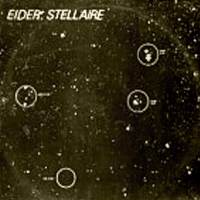
Eider Stellaire - 1981 - Eider Stellaire I

This album is, along with Eskaton's 4-Vision, the most eagerly sought-after Zeuhl disc around the planet beit Kobaia or Earth. However contrarily to Eskaton, Eider Stellaire has no wish to reissue their three albums, so most likely unless there are bootleggers around, ES will remain out of most proghead's ears for quite a while. So I set out on a hunt and finally caught a vinyl of this first album, issued in 81 on a private label and see what the fuss was all about, as I had for 4-Vision. Maybe I'll pierce a bit the speculation bubble around this, but what you get is nothing extraordinary: just good Zeuhl music with an extra little edge to give it something a tad different, but then again isn't this just about the same as all Zeuhl groups? Take Magma's music as a base or blueprint and work your own version. But in the end, it still sounds like typical Zeuhl, which there is nothing wrong in the first place.

ES is a sextet fronted by two women on vocals, one also playing the odd flute, but for the rest, it's the standard prog quartet with a guest blowing some sax in one tune. On the opening side, the 8-mins+ Onde is a terrific mainly instrumental showcase for everyone, but especially for Delachat's searing guitar. After a piano solo for intro, Arctis is certainly THE typical Zeuhl track of the album with Singery's throbbing bass as the main feature, although there is an out-of-place (or ill-advised) flute intervention, but aside that flaw, the track is outstanding and manages to hold your breath, sustain the suspense, holding the high tension until the final bass throb explosion.

The flipside opens on the aerial Légende where Delachat's saturated guitar is again holding the fore front, but Hirne's keyboards are holding the 100 MPH cruise-speed alive. Tetra is somewhat slower and takes a funkier twist, but it slows down to allow the sax's quiet solo to happen. The final Nihil track is probably the hardest and trashiest track of them all, showing a nihilistic attitude

Well, just like for Eskaton's debut album, you might be tempted to pay fortunes for the vinyls and in both case, I can't really tell you that it would be worth it. I have borrowed both of them from a friend and while I wish I had both wax slices, I'm just not prepared to dish out big amounts, even for above average Zeuhl albums. Because after all it does remain Zeuhl and sonically it brings almost nothing new to the Kobaian debate.

1. Onde (1. LP Seite) (8:35)
2. Arctis 6eme éphéméride (7:04)
3. Légende (2. LP Seite) (5:37)
4. Tétra (6:32)
5. Nihil (7:26)

¡Aquí!

martes, 27 de octubre de 2009

Einstürzende Neubauten - 1981 - Kollaps

Einstürzende Neubauten's first album, as one might imagine, is their most primitive and radical effort, the purest expression of their original aesthetic. This makes the album both historically significant and conceptually intriguing, of course, but what's most interesting about this album is that it still sounds surprising decades after its release. Often, albums that are considered extreme art statements upon their debut sound almost quaint a few years later, but while Kollaps perhaps sounds less extreme to ears that heard industrial music turned into disco pabulum by the likes of Nine Inch Nails than it did before, songs like the eight-minute title track and the rumbling live closer, "Negativ Nein," are still a fascinating blend of rhythm and random bashing, tonality and atonality, with anguished vocals by Blixa Bargeld that often seem to have little connection with anything else in the piece. The brief tracks, like the 80-second "Sehnsucht," are even more extreme explorations of pure noise. Starting as early as the next album, Einstürzende Neubauten would begin slowly introducing more mainstream musical concepts into their aesthetic, making Kollaps as undiluted a listening experience as there is in the entire catalog.


¡Aquí!

domingo, 23 de agosto de 2009

Richard Wahnfried - 1981 - Tonwelle

This 1981 album, on CD for the first time, is something of an enigma. The cover proclaims the music to be "composed by Klaus Schulze," failing to make it clear that Richard Wahnfried is the famous German electronic musician Klaus Schulze operating under a pseudonym. The album consists of four lengthy tracks, 13 to 18 minutes, mainly exercises in fusing high-energy synthesizer music with wailing acid-rock lead guitar heroics. Amphetamine sequencers, metallic synth chords, merciless drum machines, monster guitar riffing, palpitating basslines, and vocals on "Angry Young Boys" (sung by Arthur Brown of "Fire" fame) make this an endurance test for all but the most die-hard heavy rock aficionados. The saving grace here is the high-speed but fluid drumming of Michael Shrieve who shines on "Druck (Pressure)" (a Musical Starstreams feature), which sounds like it came from the 1986 album Transfer Station Blue.


¡Aquí!

martes, 7 de julio de 2009

X - 1981 - Wild Gift

For X's second release, 1981's Wild Gift, the quartet followed the same path they had taken a year earlier on their debut, Los Angeles, creating another batch of timeless compositions that merged the energy of punk rock with other musical styles. Former Doors keyboardist Ray Manzarek reprised his role as producer on what would turn out to be X's last independent release before signing to Elektra. Included are such eventual punk standards as "We're Desperate," the melodic hookfest "White Girl" (sampled years later by the Red Hot Chili Peppers in their song "Good Time Boys"), and "Beyond and Back" (which would serve as a title for their 1997 two-CD anthology). Other highlights include the '50s-prom feel of "Adult Books," the punk-pop composition "In This House That I Call Home," and the rapid "Back 2 the Base." While it may be a shade less exceptional than its predecessor, Wild Gift is nonetheless a classic effort. [In 1988 Los Angeles and Wild Gift were combined as part of a CD reissue by Slash Records.]


¡Aquí!